

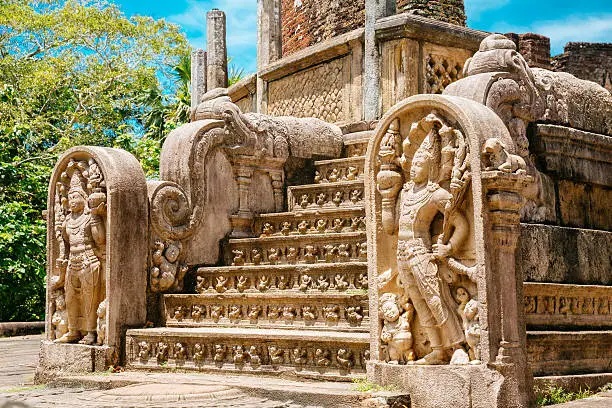
Polonnaruwa: The Medieval Capital
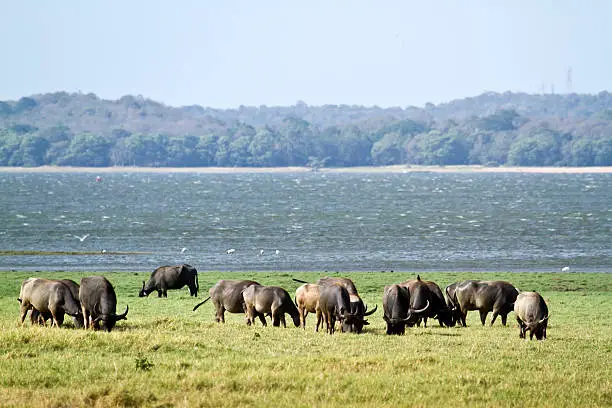
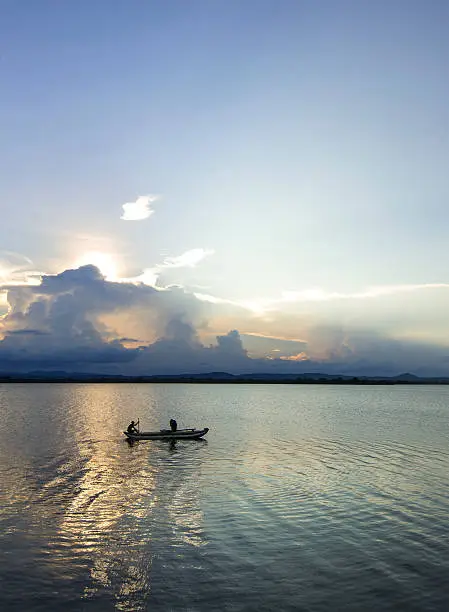
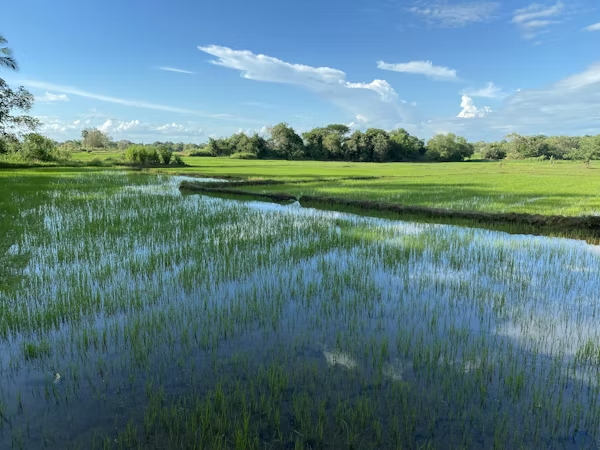
Polonnaruwa, Sri Lanka’s second ancient capital, stands as a magnificent testament to a golden age of Sinhalese culture and engineering. After the fall of Anuradhapura, the kingdom moved here in the 11th century, creating a garden city centered around the colossal Parakrama Samudra (the Sea of Parakrama)—a man-made reservoir so vast it looks like an ocean. Today, the UNESCO-listed archaeological park is a landscape of towering brick stupas, ruins of thousand-room palaces, and sophisticated irrigation systems that still water the emerald paddy fields of the dry zone.
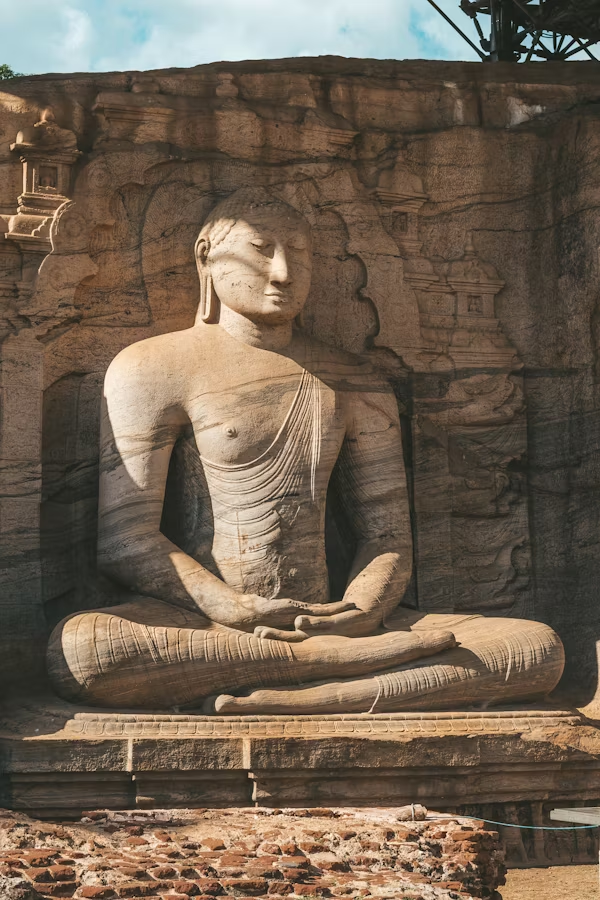
The city's architectural peak is found at the Gal Vihara (Rock Monastery), where four majestic Buddha statues are hewn from a single granite ridge. These masterpieces of ancient craftsmanship include a 14-meter-long reclining Buddha portraying the transition to Nirvana, so finely detailed that the stone appears as soft as silk. As you wander through the "Sacred Quadrangle," the most concentrated collection of religious buildings on the island, the intricate moonstones and guardstones at the entrances tell stories of the cycle of life and the city’s historic role as the guardian of the Sacred Tooth Relic.
Exploring Polonnaruwa is best done on two wheels. Cycling along the shaded, tree-lined boulevards allows you to traverse the distance between the Royal Palace of King Parakramabahu and the soaring Rankoth Vehera stupa at your own pace. Whether you are marvelling at the headless colossal Buddha within the 17-meter-high walls of Lankatilaka or watching the resident "temple monkeys" play among the ruins of the Lotus Pond, Polonnaruwa offers a profound journey back to a time of royal grandeur and spiritual enlightenment.
Destinations Features
- Architectural Masterpieces: Exploring the Gal Vihara rock carvings and the circular Vatadage, one of the most uniquely beautiful relic houses in ancient Buddhist architecture.
- Logistics & Planning: Best explored by bicycle or tuk-tuk during the dry season (January to September). Visiting at sunrise or late afternoon is recommended to avoid the midday heat on the stone ruins.
- Hydraulic Wonders: Learning about the "Sea of Parakrama," an ancient reservoir system that remains a marvel of 12th-century civil engineering and still supports local agriculture today.
- Local Etiquette: Strict adherence to temple dress codes (covering shoulders and knees) is required. Note that photography with your back turned to Buddha statues is considered disrespectful and is prohibited.
Exciting but also a bit overwhelming with so many amazing places out there! Let’s narrow it down—Miracle Lanka truly captures the magic of Sri Lanka.
So many amazing places out there! Let’s narrow it down with Miracle Lanka.