

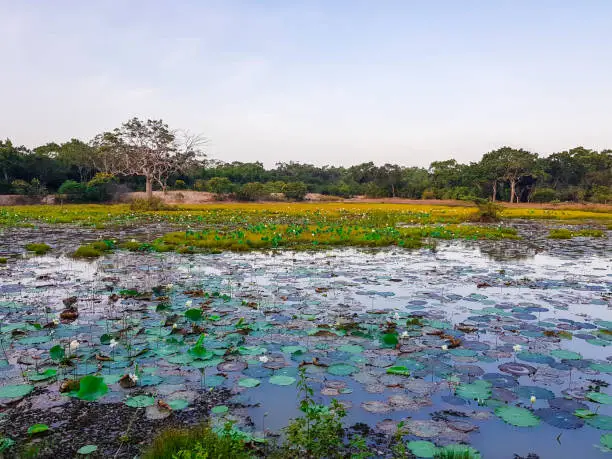
Wilpattu: The Land of Lakes
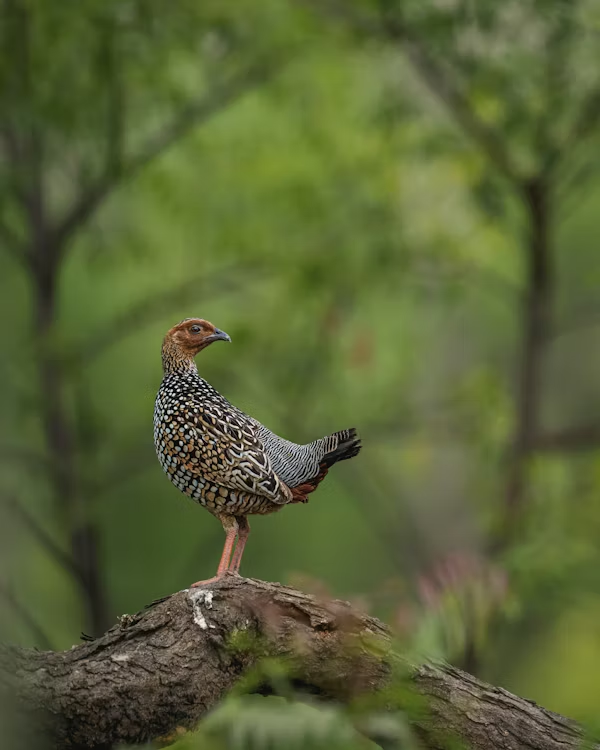
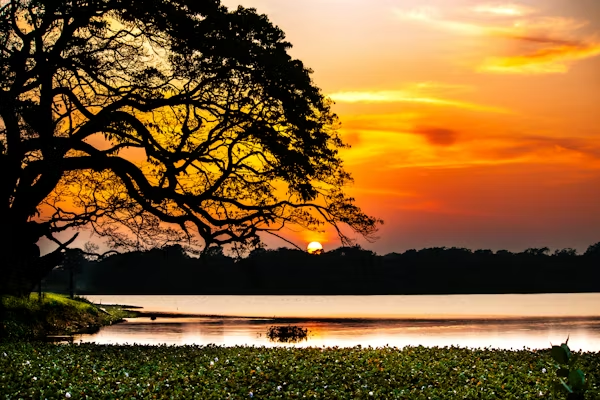
Wilpattu National Park is a realm of raw, untouched wilderness and the largest protected sanctuary in Sri Lanka. Its name, derived from "Willu-pattu" (Land of Lakes), perfectly describes its most striking feature: nearly 60 "Villus," or natural, sand-rimmed water basins that fill with rainwater. Located on the northwest coast, this sprawling 1,317-square-kilometer park is a mosaic of dense monsoon forests, open grasslands, and copper-red coastal soils. Unlike the busier parks of the south, Wilpattu offers a sense of profound solitude, where the silence is only broken by the distant call of a junglefowl or the rustle of a leopard in the undergrowth.
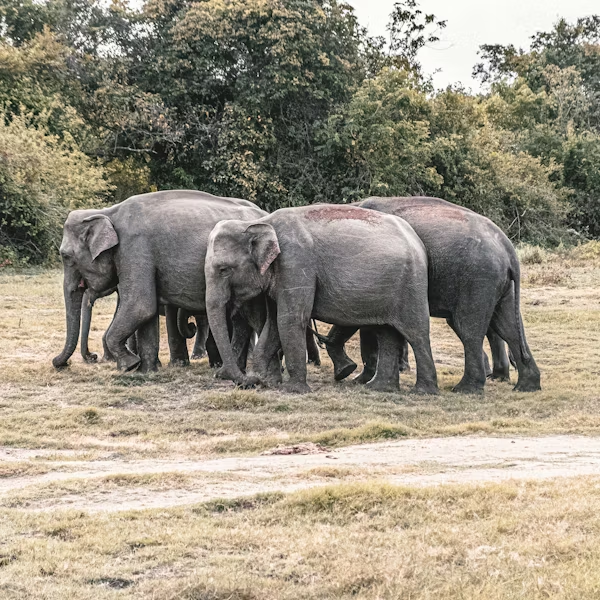
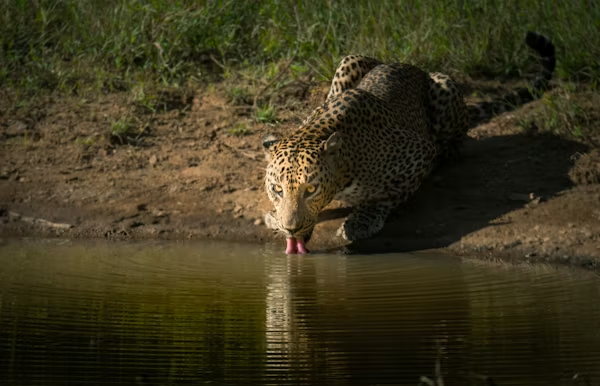
The park is world-renowned for its healthy leopard population, often spotted lounging on the sandy tracks or near the edges of the permanent villus. However, Wilpattu’s true charm lies in its diversity. It is one of the best places on the island to catch a glimpse of the shaggy Sri Lankan sloth bear, particularly during the fruiting season of the Palu trees. Herds of spotted deer, wild boar, and mugger crocodiles are common sights, while the western boundary of the park touches the coast, providing a unique habitat where forest wildlife meets the salty breeze of the Indian Ocean.
Beyond its biodiversity, Wilpattu is steeped in the very origin stories of Sri Lanka. Legend has it that in 543 BC, Prince Vijaya landed at Kudiramalai Point—marked by its distinct red earth—to found the Sinhalese kingdom. The park is dotted with over 60 archaeological sites, including the ruins of ancient palaces and stone pillars at Kali Villu, said to be the home of the Yaksha Princess Kuveni. Whether you are tracking apex predators or exploring the ruins of a lost civilization, Wilpattu offers a safari experience that is as much a journey through time as it is through nature.
Destinations Features
- The "Willu" Ecosystem: Exploring the unique sand-rimmed lakes that serve as the primary watering holes for leopards, sloth bears, and migratory water birds.
- Logistics & Planning: Recommending a visit between February and October, with the peak dry season (May to September) offering the best wildlife visibility near the villus.
- Legend & Lore: Visiting the copper-red cliffs of Kudiramalai and the ancient ruins of Kuveni’s Palace to connect with the foundational myths of Sri Lankan history.
- Safari Etiquette: Emphasizing the "Quiet Safari" approach—Wilpattu is prized for its tranquility, so keeping noise to a minimum and staying in the vehicle is essential for a respectful experience.
Exciting but also a bit overwhelming with so many amazing places out there! Let’s narrow it down—Miracle Lanka truly captures the magic of Sri Lanka.
So many amazing places out there! Let’s narrow it down with Miracle Lanka.